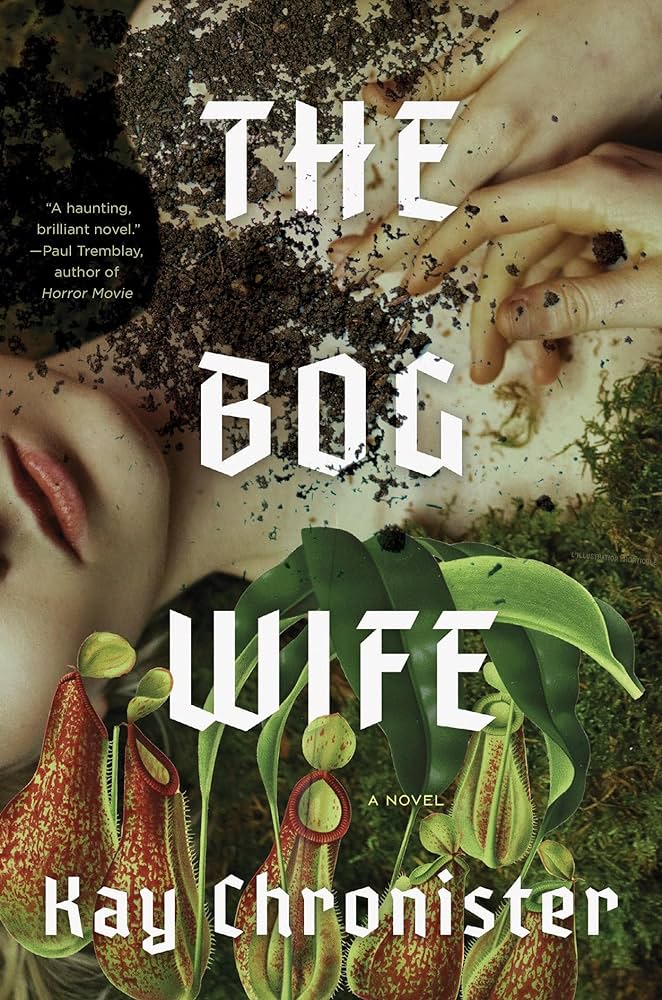
A family’s longstanding contract with their ancestral land unravels in Kay Chronister’s newest novel, The Bog Wife. Charlie, Eda, Wenna, Percy, and Nora are preparing to inherit their family’s cranberry bog through a ritual that generations of Haddesley children before them have performed; they will feed their dying father to the bog, then accept the new matriarch that emerges from its depths. The eldest son will marry the bog wife and continue the family line, along with the family’s ancient compact with the land that nurtures them: “Always the bog has belonged to us and we to it.” However, when the time comes and the children feed their father’s body to the bog, a bog wife does not appear.
This simple mishap calls everything into question, including the strange disappearance of their mother, the last bog wife that came from the land. In the year that follows their father’s death, each of the Haddesley children scrutinize the past while frantically attempting to carve out a future for themselves. While a few of them attempt to renew the covenant with the bog using extreme measures, others start to wonder what would happen if they left it. Riveting, haunting, and gorgeous, The Bog Wife is a novel about the cycles of life and breaking tradition.
A top secret branch of the British government is experimenting with time travel, and it is taking certain individuals, called “expats,” from the past and bringing them to the present day. The Ministry of Time is the story of a civil servant who is tasked with assisting expat Commander Graham Gore, thought to have perished in a failed Arctic expedition in the 19th century, adjust to modern life. It turns out that this involves teaching him how to bike, how to Google things, copious amounts of smoking and cooking, and also falling deeply in love—that is, until the true purpose of the experiment, as well as a deep deception, comes to light.
There is something very refreshing about The Ministry of Time. Kaliane Bradley’s prose is snappy and invigorating, and the themes feel very well-calibrated, especially when it comes to the race politics in the book—the protagonist and narrator is a British-Cambodian woman, and pairing her with a Victorian gentleman who lived during the height of the British empire brought out some riveting dynamics. The narrator doesn’t condemn Graham for his eccentricities or for the actions of his past, but brings certain beliefs, especially his belief in the government he served, up close for examination. This feels even more important as Graham’s tragic time in the Arctic comes to light, and it’s very easy to fall in love with Graham because of this as well—he shows himself as someone who, to put it very simply, tries hard and earnestly to learn from the mistakes of the past. As much a sultry romance as it is a political thriller, I did find the novel to be a bit slow at the beginning, but after I crossed a certain threshold, it was very hard to put it down.
Feels like: Discovering old love letters in an attic, the moments right before a villain reveal
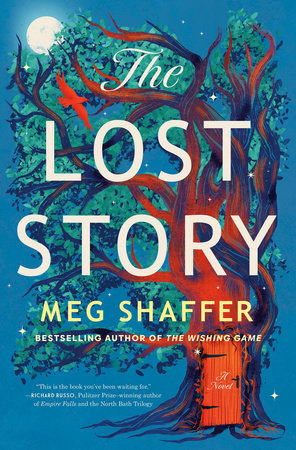
After famously going missing as children in the West Virginia wilderness, Jeremy and Rafe reunite fifteen years later as adults to find a lost girl in the same woods and discover something magical had been waiting for them.
From the first page, The Lost Story is teeming with magic. It starts from an outsider’s perspective of the moment Jeremy and Rafe are found after being missing for months, and they’re described as older than their “missing” photos, as well as strong and nourished—pretty much the opposite of people who were lost in the woods for that long. It sets up a mystery really well: where were they, and how did they get back home?
As I went on into the first half of the book, I really enjoyed the rising tension as Emilie reaches out to Jeremy for help to find her sister and in the drama between Jeremy and Rafe as they’re forced back together. I also really enjoyed the urban fantasy elements surrounding Jeremy’s strange power to find lost things, as well as Rafe’s vivid dreams and how it translated into his artwork. However, as the answers to the questions I had started to reveal themselves and the novel shifted into something less urban fantasy and more fantasy fantasy, I felt like the novel lost some of its hold on me. Some of the high fantasy elements were a bit elementary to me, and the constant references to C.S. Lewis, Narnia, and other “classic” fantasy did not help.
Still, I felt very invested in the characters and to what happened to them. I fell in love with Jeremy, Rafe, and Emilie from the moment they appeared on the page. Their easy banter was fun to read, and I was ecstatic to see them get their happy endings.
Feels like: Playing castle on a plastic jungle gym, adding cinnamon to your coffee, jumping into a pile of leaves.
On a breezy, New York morning, Theo Decker and his mother take a detour to The Metropolitan Museum of Art, not knowing that the choice will change their lives forever. An ill-fated incident leaves Theo motherless at thirteen and in possession of Carel Fabritius’ most famous works, a secret he takes with him through the fog that follows right after his mother’s death, the hapless days wandering the Las Vegas suburbs, then back to New York where, as an adult, he finds himself and his painting at the center of dangerous dealings.
To be honest, it took me months to finish The Goldfinch. It wasn’t because I didn’t like it—it is beautifully written, strangely addictive, but also just incredibly dense. Each sentence is packed with details and information, so I could only read it in little bits for a long time.
The novel is broken into five parts. The first four parts follow Theo through the accident at The Met and the first few year after his mother’s death; his life with the Barbours in the Upper East Side, his tumultuous relationship with his father when he’s whisked away to Las Vegas, and his friendship with Boris. The rest of the novel focuses on Theo’s adulthood, including his work at the antique shop with Hobie and the intrigue surrounding “The Goldfinch” as he tries to figure out how to come clean about it.
Through the first four parts of the novel, I felt very invested in Theo, a child that found himself helpless to his very incredible and sad circumstances and did his very best to survive. I spent a lot of time feeling scared for him, because even if he was doing his best, he wasn’t making the best decisions, from something as small as ignoring advice to take up a hobby from his guidance counselor to his blackout nights after underage drinking and drug use. Through Theo’s journey, I was also very drawn to the gorgeously rendered characters that popped in and out of his life, especially Hobie, the warm and steady vintage shop owner and later guardian, Boris, the wild and charming fellow loner, and Pippa, the seemingly carefree love of Theo’s life.
As the novel progressed, Theo’s bad decision-making has even bigger consequences, and I admit I found myself more and more disinterested as I kept reading through the novel’s final, climactic events. Theo himself isn’t unlikeable, but I felt as though I wanted more for him, especially in the concluding events surrounding “The Goldfish,” the precious painting that he works so hard to keep safe and agonizes over throughout the novel. The painting has such a strong presence throughout the story, so I was curious about what would happen with it, but when the painting changes hands unexpectedly in the latter part of the novel, I felt as though the resulting events took away from both Theo’s agency surrounding the painting and his long-awaited confession to Hobie.
Even if the ending wasn’t quite right for me, I still enjoyed The Goldfinch very much. I was in awe of Donna Tartt’s incredible gift for perfectly describing the feeling of a certain day, as well as the tangible essence of her characters. The Goldfinch is discomfiting, mysterious, and full of heart.
You can find The Goldfinchon Bookshop or wherever books are sold.
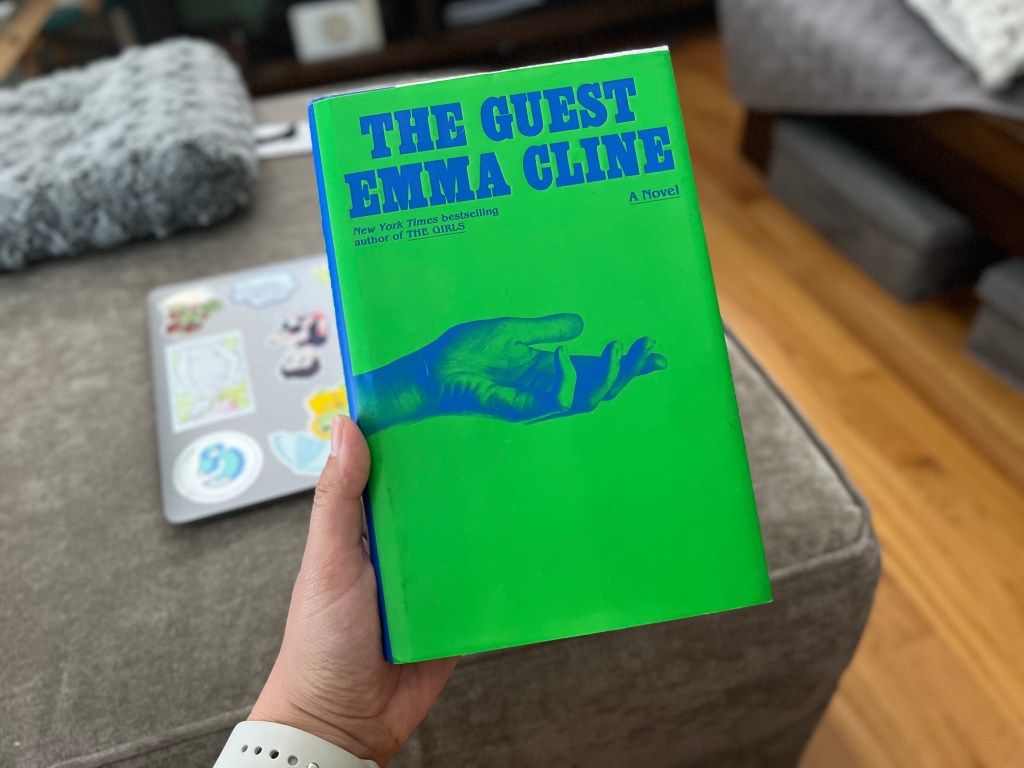
It’s the last days of summer on Long Island, and Alex is alone with a bag of clothes, a water damaged phone, and no place to stay. Determined not to be sent back to the city where she’s burned all her bridges, Alex decides to out wait out the six aimless days until Simon’s Labor Day party—her absolute last chance to get back in his good graces—by using her charms and talent for reading people to keep herself afloat.
The Guest is tense, measured, and morbidly gratifying in the ways Alex easily wins people over and just as easily cuts them loose.
For more quick stats and observations, I wanted to include a Storygraph-Style Q+A, with a little more added detail:
Mood? Tense, Mysterious, Reflective.
Pace? Fast. I think it’s deceptively slow-to-medium paced because there are many moments where Alex languishes in comfort and safety, but these moments are very fleeting. Alex is mostly never in the same place for more than two or three chapters, and the closer she gets to Simon’s party, the more mistakes she makes.
Plot- or character-driven? Character. Alex’s desire and desperation to stay in Long Island is the driving force of the novel, and the question of if she can actually do it makes this a really focused, fun read.
Strong character development? No. Alex is very memorable because she does the same things over again and hopes for different results up until the very end. Those who want tragic origin stories and definitive conclusions will not be satisfied with how everything pans out, but it’s kind of delightful to see the many ways Alex can crash and burn.
Loveable Characters? No. There are definitely characters I feel sorry for and characters that are horrible, but no one feels truly loveable or “good.”
Flaws of the characters the main focus? Yes, absolutely. While Alex herself is very flawed, it’s also intriguing to read about the flaws she sees in the supporting characters.